
We know our impacts become your impacts
Your sustainability objectives can only be met if your partners and suppliers are committed to setting, meeting and surpassing their own targets. This is especially relevant for lighting today, as 78% of the impact of our products will be incurred long after they leave our gates. But, this is a figure that’s changing fast.

Sustainability is a way of life for us
We’re about action and not just words. We have four pillars that bring focus to our sustainability strategy and drive operational and manufacturing excellence across our business
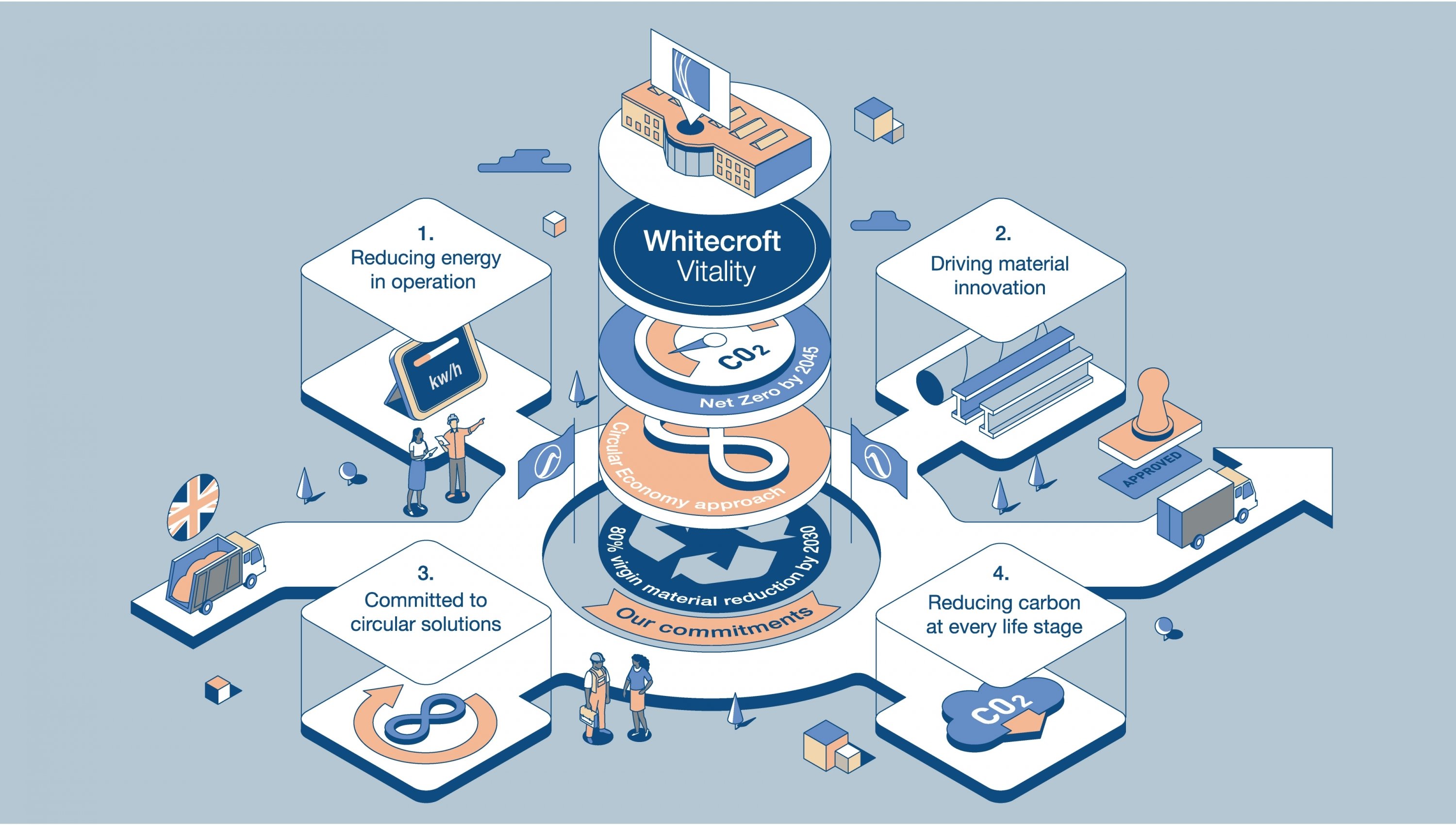
1. Reducing energy in operation
- Switching to a renewable supply is a good start, but reducing the energy we use in the first place is an even better start
- We are continually driving down the cost of lighting a space. While the traditional metric of luminaire lumens per watt (llm/W) tells us how efficient a product is, this design-for-compliance approach can result in a significant gap between how well a product is capable of performing and how it performs when used, known as the Performance Gap. For us, it is about going beyond compliance to performance excellence.
- As the UK fluorescent lamp phase out continues, it presents British businesses with a forced but timely opportunity to consider the long-term energy cost, efficiency, and quality of their lighting.

2. Driving material innovation
- We’ve set ourselves an ambitious target to reduce our use of virgin materials by 80% by 2030 (compared to 2021).
- We are also constantly challenging ourselves to reduce the embodied carbon within our products through intelligent design and careful material selection.
- We’re using fewer resources by making our products lighter, simpler and modular.
- We’re increasing our use of recycled content year on year to help meet our target of an 80% reduction in our use of virgin materials by 2030.
- We understand our materials composition by seeking verification against the Cradle to Cradle® Restricted Substances List (RSL).

3. Committed to circular solutions
- The circular economy envisions a world where every product is made with its entire life cycle in mind. It begins with design, then manufacture, usage, then finally end of life.
- The aim is that the resources used in a product can go round and round in infinite circles, reducing waste and use of virgin materials. While it starts with a focus on design and innovation, it requires a mindset shift for the whole business and the adoption of new practices, across every aspect of the product life cycle.
- At Whitecroft, circularity is a primary focus. The Cradle to Cradle® Product Innovation Institute, the internationally recognised assessment body of circular solutions, has already certified our Whitecroft Vitality range, and we’re increasing our commitment to their principles every day.

Linear vs. circular
Linear design plunders natural resources and promotes a throw away culture. Adopting circular design and business models prolongs product life, promotes regeneration, maximises material value and reduces our demand on virgin materials.

Linear vs. circular
Designed for circularity
How we apply circular design and processes at every stage of production


-
Our ambition is to reduce our use of virgin materials by 80% by 2030. We also source from UK suppliers, reducing transportation emissions.
-
By reducing the size and weight of our products, we’re able to further reduce materials. By making our products using durable, modular and replaceable components, we’re designing in the ability to maintain and regenerate them, prolonging life and designing out waste.
-
We use renewable energy to power our operations. We also use a UK based supplier network meaning our deliveries keep their carbon footprint down.
-
Getting your w/m2 as low as possible while maintaining comfort, interest and compliance, is crucial. Our creative application designers ensure the right placement of our products for maximum energy saving.
-
Our cutting-edge lighting controls ensure no luminaire is ever on unless it needs to be. Monitoring luminaire performance effectively in this way can make a saving on your energy usage of up to 30%.
When you choose Whitecroft, our carbon reduction becomes your carbon reduction
4. Reducing carbon at every life stage
- Reducing energy usage and switching to renewable sources reduces the carbon impact of a product in operation. But that doesn’t account for the impact a product has during manufacture (known as embodied carbon), or the carbon impacts of disposal at end of life.
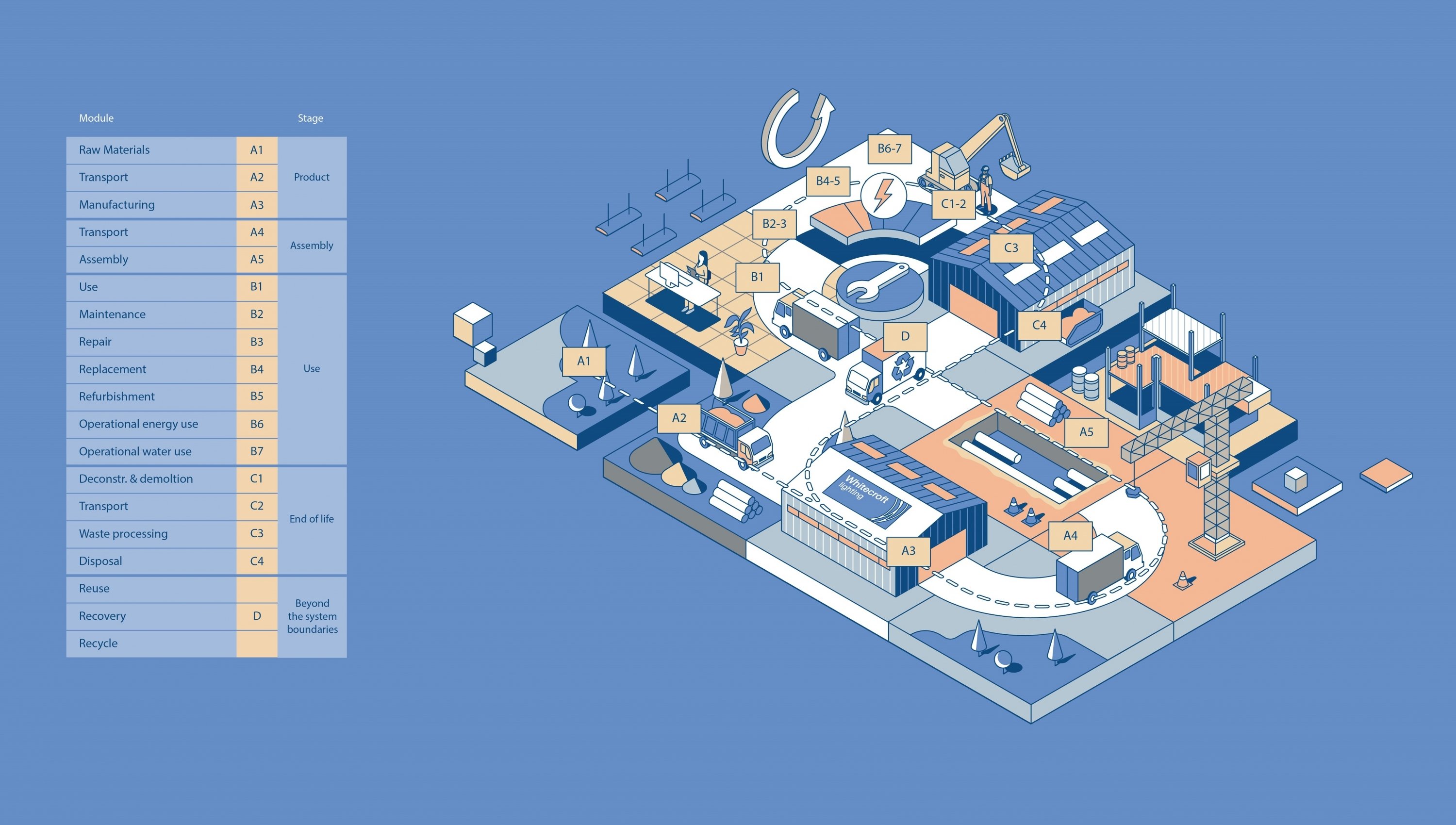
- At Whitecroft, we’re modelling the entire life cycle of our products and we’re innovating to reduce carbon at every stage using One Click LCA.
- We’re committed to complete transparency when it comes to the impacts of our products. In doing so, we constantly challenge ourselves to improve, as well as supporting our customers in achieving their sustainability ambitions.
- The 2022 Circularity Gap Report highlighted that through the adoption of the Circular economy, embodied carbon could be reduced by up to 39%

The lifecycle of a built asset
We’re committed to complete transparency when it comes to the impacts of our products. At Whitecroft, we’re modelling the entire life cycle of our products and we’re innovating to reduce carbon at every stage using One Click LCA software.
Let's talk about sustainability

Whitecroft Vitality Products


Lighting solutions to meet your sustainability ambitions
Our industry leading approach to sustainable excellence




- +44 (0)161 330 6811
- email@whitecroftlight.com

©2026 Whitecroft Lighting | Company number 3848973